
 Aventure
 Cultural
 Gastronomy
 Wellness
 Local Living
 Luxury
Why Should I Visit Cajamarca in Peru?
Written by:Claire Dean
Last Update: 2026-06-03
Why Visit Cajamarca, Peru?
Cajamarca sits in northern Peru, where Inca and Spanish history intersect in a way few destinations can match. It was here, in 1532, that the encounter between Atahualpa and Francisco Pizarro changed the course of South American history. Recognized by UNESCO as a site of historical and cultural heritage of the Americas, the city is also known for its colonial churches, archaeological sites, and traditions that remain deeply rooted in local life today.
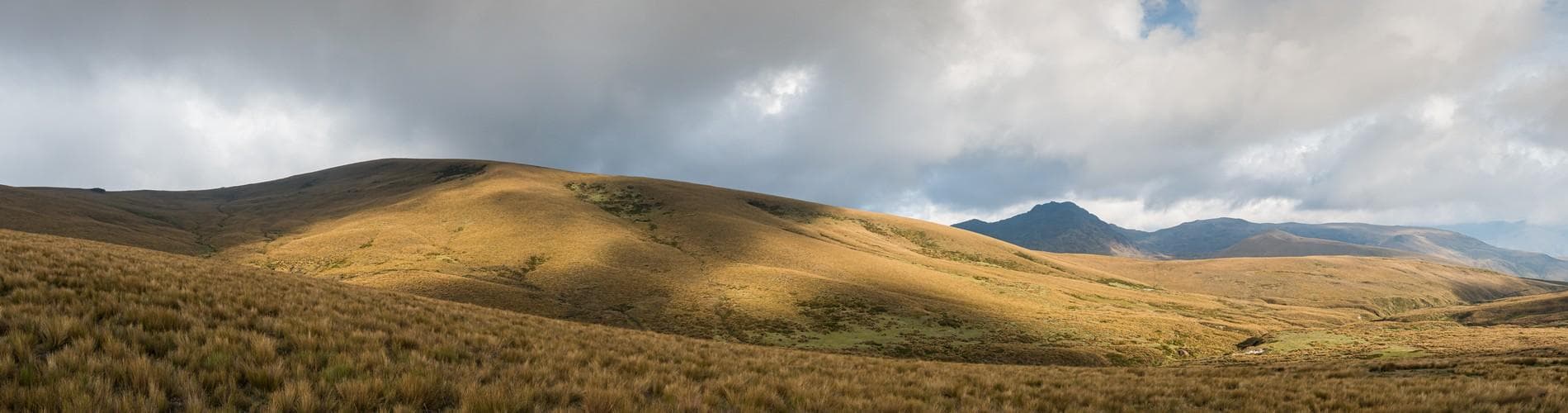
Beyond its historical significance, Cajamarca offers thermal baths, pre-Columbian ruins, scenic mountain landscapes, and a slower pace than Peru’s more visited destinations. The surrounding region stretches to the Ecuadorian border and is known for its agricultural heritage, dairy production, and rich cultural identity, making it an appealing destination for travelers seeking a different side of Peru.
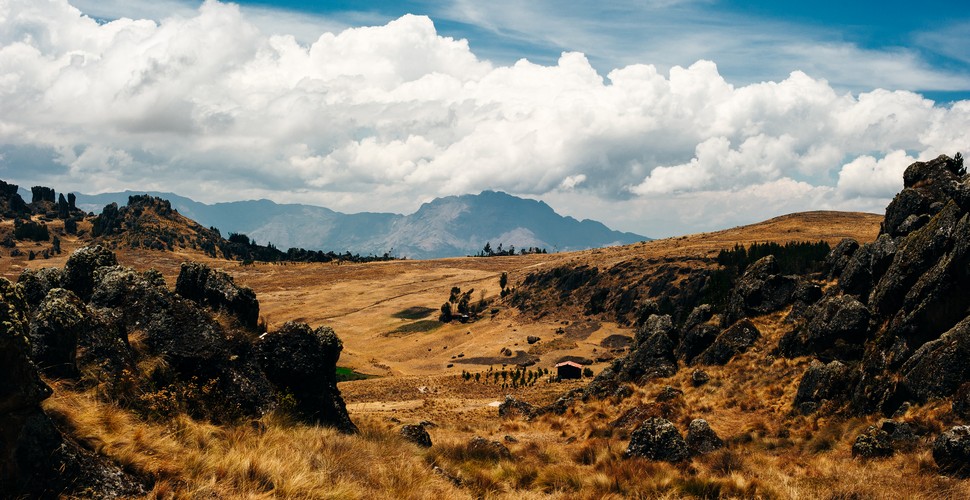
Cumbemayo
The History of Cajamarca
The Meeting That Changed South America Forever
It was in Cajamarca that the encounter between Inca Atahualpa and Francisco Pizarro's Spanish forces took place in November 1532.
What began as an organized meeting quickly became one of the most consequential moments in South American history. It marked the beginning of the end of the Inca Empire and the expansion of Spanish rule across much of the continent.
What followed is still difficult to imagine today. Just 180 Spanish soldiers managed to capture the Inca ruler despite the presence of a much larger force. Historical accounts describe how Atahualpa rejected the holy Bible presented to him, an event that intensified tensions between both sides and became part of the story that followed.
Pizarro demanded an enormous ransom. Near the Plaza de Armas, one of the largest squares in Peru, stands the famous Cuarto del Rescate, or Ransom Room.
Atahualpa was ordered to fill the chamber with gold and silver in exchange for his freedom. Despite delivering the treasure, he was later executed. Today, the room remains one of the most important historical landmarks in Cajamarca and the city's best-known connection to its Inca past.
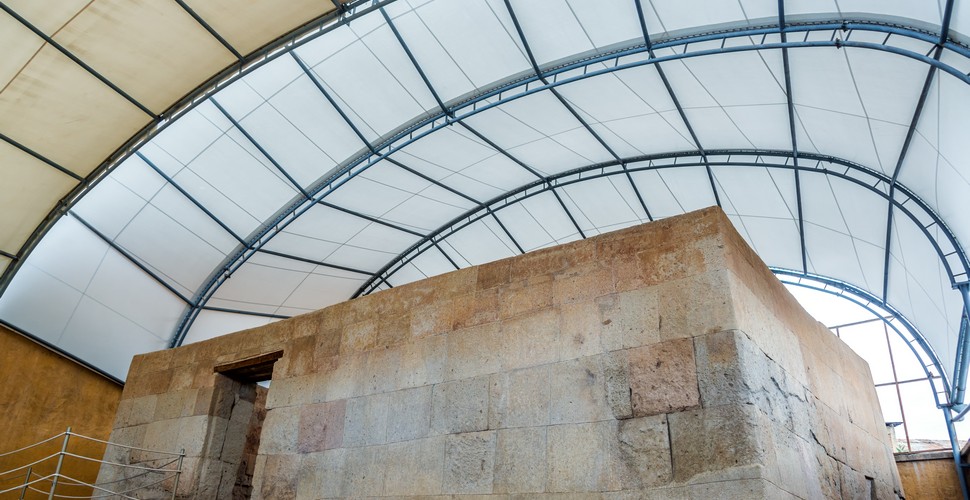
The Ransom Room
What To Do in the Cajamarca Region?
The Ransom Room (Cuarto del Rescate)
The only Inca construction still standing in Cajamarca, the Ransom Room is where the last Inca ruler, Atahualpa, was imprisoned after his capture.
The small structure has three trapezoidal doorways and several niches typical of Inca architecture. Visitors are not allowed to enter, but from outside it is possible to see the red line marking the height to which the room was to be filled with treasure.
Beyond its historical significance, the Cuarto del Rescate stands out for the precision of its stonework. The carefully fitted stones remain an impressive example of Inca engineering and craftsmanship.
The Cathedral
Often called the Mother Church of Santa Catalina, the Cathedral of Cajamarca is one of the finest examples of Peruvian Baroque architecture.
Construction began in the late seventeenth century and continued for decades. The facade, carved entirely from volcanic stone, remains the building's most striking feature.
Like many churches in Cajamarca, the cathedral lacks a completed bell tower. Historians attribute this to colonial taxes imposed on finished churches, which encouraged some communities to leave parts of their buildings unfinished.
Inside, the atmosphere is more restrained than the ornate exterior suggests, although the gold-covered baroque altarpiece remains a highlight.
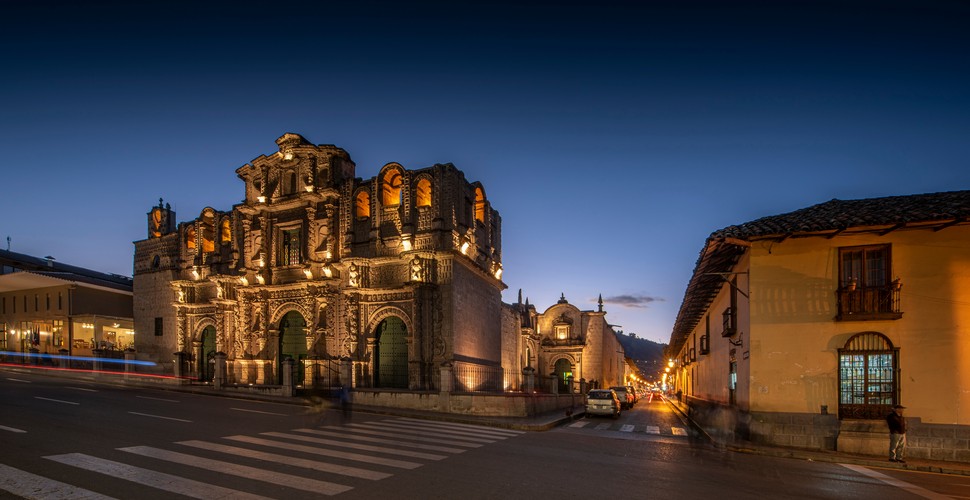
The Cajamarca Cathedral
The San Francisco Church
Built during the seventeenth century, the San Francisco Church is one of Cajamarca's most important religious landmarks. Unlike many churches in the city, it features two bell towers overlooking the Plaza de Armas.
Part of the structure was built using stones taken from the House of Snakes Temple on Santa Apolonia Hill. Inside, the Museo de Arte Religioso displays seventeenth-century paintings created by Indigenous artists.
The church also contains catacombs where Franciscan friars and members of the local nobility were buried, offering another glimpse into Cajamarca's colonial past.
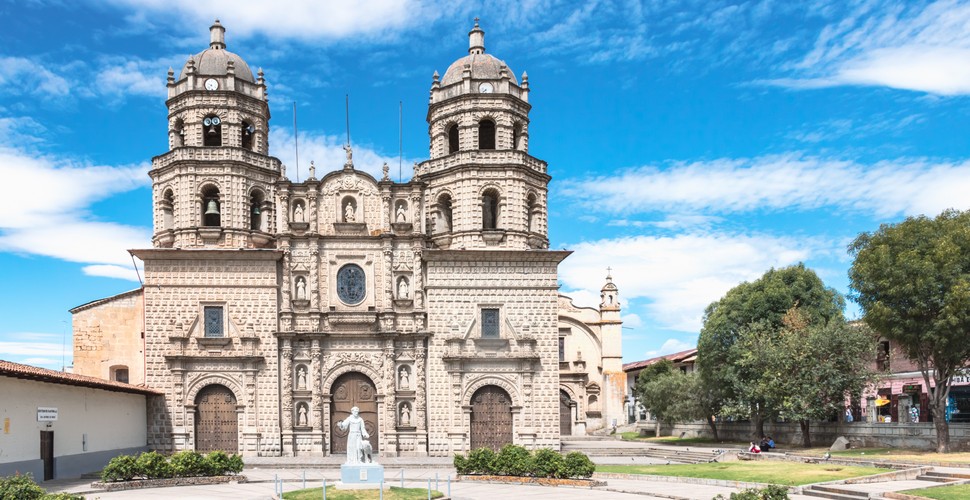
San Francisco Church
The Monuments of Belén
The Belén Complex is one of Cajamarca's most attractive colonial sites. Built between 1627 and 1774 from volcanic stone, it originally functioned as both a church and a hospital.
Today, the complex hosts cultural exhibitions and art displays. The adjoining baroque church is especially admired for its carved pulpit and elegant architectural details.
Its quieter atmosphere makes it a pleasant stop for travelers interested in history, architecture, and photography.
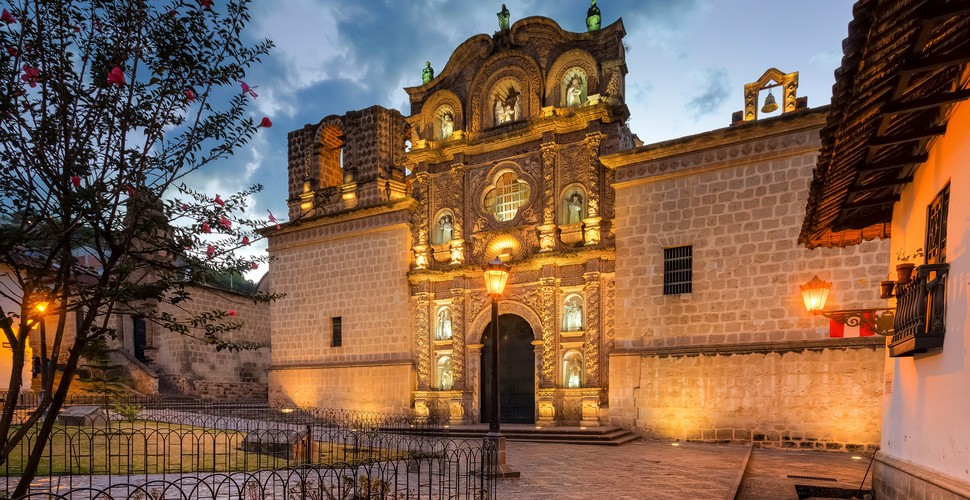
Belen Church
The Inca Chair at Santa Apolonia Hill
For the best panoramic views of Cajamarca and the surrounding valley, head to Santa Apolonia Hill.
Known in Quechua as Rumi Tiana, or "stone seat," the site preserves traces of pre-Hispanic structures. Its most famous feature is the Inca Chair, a throne-like seat carved directly into the rock. The short climb rewards visitors with one of the best viewpoints in the city.
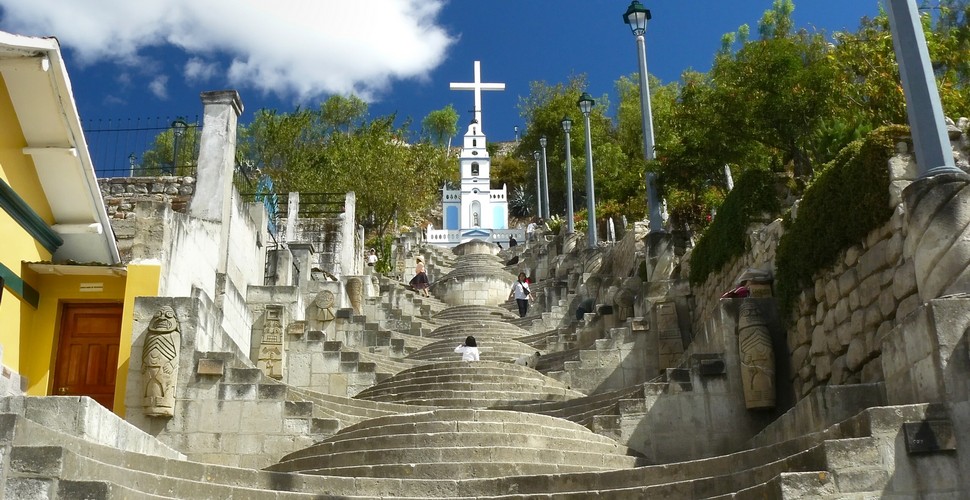
Santa Apolonia hill
The Inca Baths (Baños del Inca)
Located around six kilometers from Cajamarca, the Inca Baths have attracted visitors since pre-Inca times.
The thermal waters are known for their relaxing and therapeutic properties. According to local tradition, Atahualpa visited the baths shortly before meeting Pizarro.
Today, visitors can enjoy pools fed by natural hot springs while learning about one of the region's most famous historical sites.
Cumbemayo
Dating back to around 1500 B.C. Cumbemayo is believed to be one of the oldest man-made sites in South America.
Located about 20 kilometers from Cajamarca at 3,500 meters above sea level, the site is famous for its eight-kilometer aqueduct, an extraordinary example of ancient hydraulic engineering.
Visitors can also explore a striking stone forest filled with rock formations known as "friars," along with petroglyphs, ceremonial altars, tunnels, and other archaeological remains.
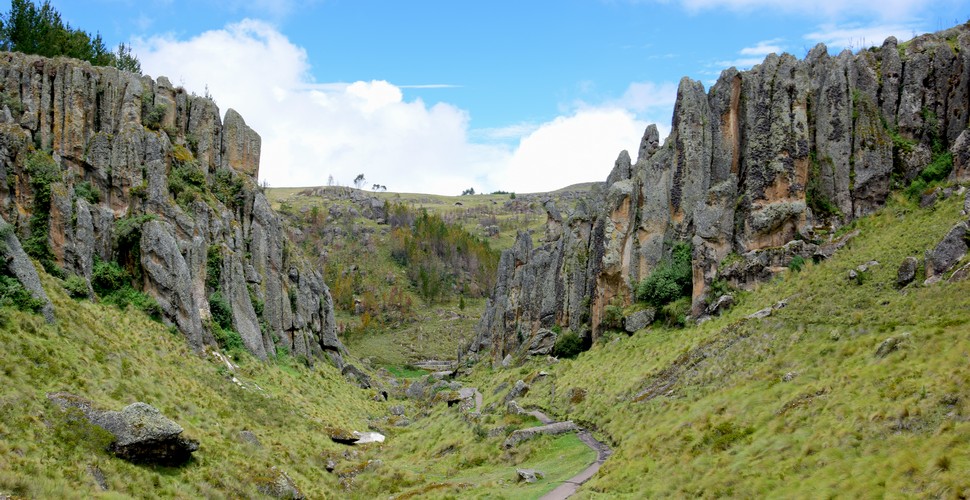
Cumbemayo
The Otuzco Windows
Just north of Cajamarca lies the Otuzco archaeological site, a ceremonial burial ground carved into volcanic rock.
Hundreds of window-like niches line the cliffs, some reaching depths of up to ten meters. These funerary chambers belonged to the ancient Cajamarca Culture, which buried its dead within cavities carved into the mountainside.
The surrounding countryside adds to the appeal and makes the journey there part of the experience.
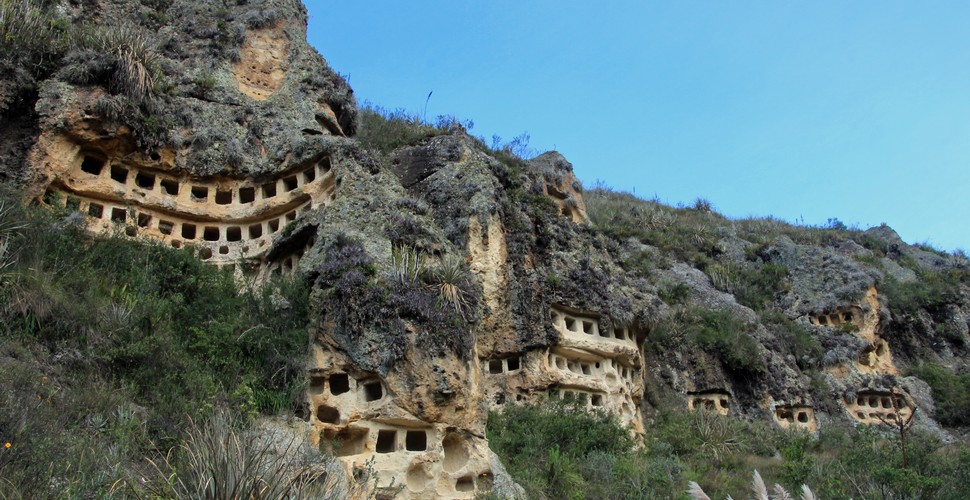
Otuzco Windows
Archaeology and Ethnicity Museum
Located inside the former Antigua Hospital de Mujeres, this small museum offers a closer look at Cajamarca's cultural heritage.
Its exhibits include pre-Columbian pottery, stone sculptures, traditional clothing, musical instruments, and agricultural tools. One of its most unusual displays is the mummified remains of a baby preserved inside a ceramic vessel.
The building's ornate facade is also worth a closer look, particularly the carved figure of a woman with four breasts, linked to local legends and traditions.
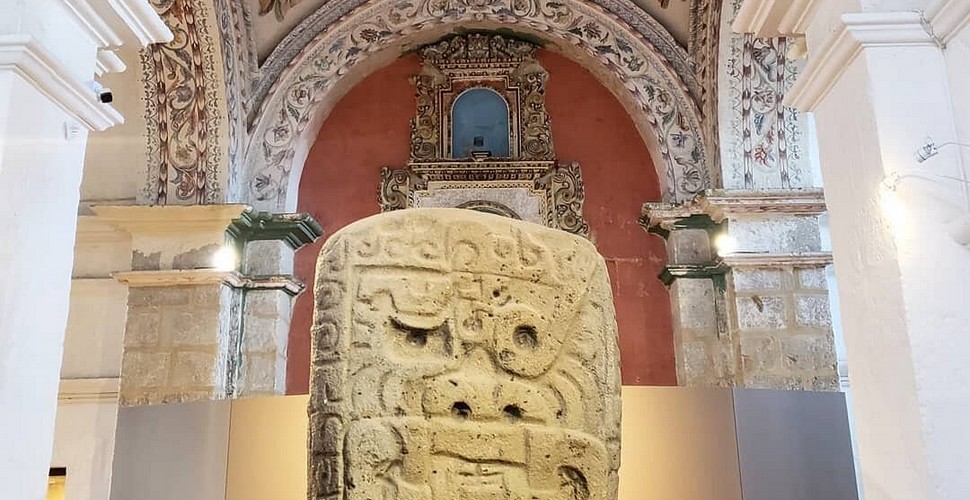
Archaeology and Ethnicity Museum
Is Cajamarca Worth Visiting? Our Take
Cajamarca doesn't receive the same attention as Cusco or Machu Picchu, and that's part of its appeal. Its history, archaeology, architecture, and traditions create an experience that feels both authentic and rewarding.
For travelers looking to explore beyond Peru's classic tourist circuit, Cajamarca offers a fascinating combination of historical landmarks, Andean landscapes, and local culture.
At Valencia Travel Cusco, we can help you include Cajamarca in a wider Peru itinerary or design a journey focused on northern Peru's cultural treasures. Get in touch and discover a side of Peru that many travelers never see.
SHARE THIS POST
Popular Posts